Bulwijn.nl
 Bulwijn.be


Two Bulgarian Mavrud wines reach the final of the 2026 Proefschrift Wine Competition in the Netherlands

Another success for Bulgarian wine at the Proefschrift Wine Competition
Two Bulgarian wines from our portfolio have reached the final selection of the 38th Proefschrift Wine Competition 2026. Both VINICA Mavrud 2020 and Family Collection Mavrud 2020, from Zagreus Winery in the Thracian Lowlands, are among the finalists and are in the running for the title Wine of the Year 2026.
That is significant in itself. Two wines from the same Bulgarian producer, made from the same indigenous grape variety, have reached the final of a Dutch wine competition in the same year – and in two different price categories.
But the bigger story may be even more interesting. This result is not an isolated success. It is part of a pattern stretching over several years, in which wines from Zagreus and other producers in our portfolio have repeatedly earned professional recognition – in the Netherlands, in Bulgaria itself and at international wine competitions.
And that is precisely why this final says more than something about two exceptional bottles. It also tells us something about where Bulgarian wine stands today.
The finalists at a glance
VINICA Mavrud 2020
Producer: Zagreus Winery
Origin: Thracian Lowlands, Bulgaria
Grape variety: 100% Mavrud
Style: dry red wine
Distinctive feature: made from dried grapes
Proefschrift price category: €20.01–€25.00
Importer: Bulwine Import
Family Collection Mavrud 2020
Producer: Zagreus Winery
Origin: Thracian Lowlands, Bulgaria
Grape variety: 100% Mavrud
Style: dry red wine
Distinctive feature: made from partially dried grapes
Proefschrift price category: €30.01–€40.00
Importer: Bulwine Import
Final and presentation: Monday, 21 September 2026, during Gastvrij Rotterdam at Rotterdam Ahoy
Wine of the Year winners announced: 15:00 at the Proefschrift Theater
Location: Hall 6, stand 6100
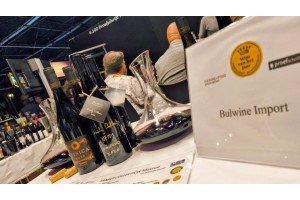
More than one hundred finalist wines from the 38th Proefschrift Wine Competition will be presented during the first day of the trade fair. At 15:00, the winning wine in each price category will be announced and the winning importers honoured.
The video below gives an impression of Gastvrij Rotterdam, the scale and atmosphere of the event where the final of the Proefschrift Wine Competition takes place (in Dutch).
Five competitions in a row – no one-off success
For us, what matters most about this latest final is the continuity behind it.
In 2022, both Minimum Mavrud 2020 and Family Collection Mavrud 2016 from Zagreus reached the final of the 34th Proefschrift Wine Competition. The tasting panel praised Minimum Mavrud for, among other things, its fruit, freshness, spice and balance. Family Collection received a score of 8.5 and was described as a surprisingly gastronomic wine.
A year later, at the 35th competition in 2023, two Zagreus wines from our portfolio were once again among the finalists: VINICA Mavrud 2019 and Three Generations 2019. Proefschrift recognised both as wines with distinctive character and strong gastronomic potential.
In 2024, Family Collection Mavrud 2018 again reached the final of the 36th Proefschrift Wine Competition. In 2025, it was followed by Family Collection Mavrud 2020, which received a score of 8+ at the 37th competition, with particular praise for its intensity, balance and length.
And now, in 2026, VINICA Mavrud 2020 and Family Collection Mavrud 2020 are both in the final selection.
That means that every year from 2022 through 2026, at least one wine from Zagreus Winery in our portfolio has reached the final of the Proefschrift Wine Competition.
We were there again last year, when Family Collection Mavrud once more reached the final. The video below gives a good impression of the Wine of the Year announcement and the atmosphere during the award ceremony.
Five competitions in a row
It is precisely this repetition that makes the achievement so meaningful to us. A single strong result can be a memorable moment. But when different vintages and different wines continue to be selected year after year against strong international competition, a much broader picture begins to emerge – one of consistent quality.
The recognition starts at home
The results in the Netherlands are only one part of the story. In Bulgaria itself, VINICA has ranked among the country’s most recognised wines for years.
In the DiVino TOP 50, an annual ranking of Bulgarian wines based on professional tastings, Zagreus VINICA Mavrud 2013 was named Bulgaria’s No. 1 wine in 2016. It also received the awards for Best Red Wine and Best Wine from a Local Grape Variety.
Far from being a one-off achievement, VINICA continued to perform strongly with later vintages. It ranked No. 4 in 2018, again receiving the award for Best Wine from a Local Grape Variety. In 2019 it reached No. 3, together with the distinction for Best Red Wine from a Local Grape Variety. VINICA ranked No. 9 in 2022, while the current vintage, VINICA Mavrud 2020, returned to the DiVino TOP 50 in 2024, once again placing it among Bulgaria’s leading wines.
That makes this year’s Proefschrift final particularly interesting. The very same VINICA Mavrud 2020 that was once again ranked among Bulgaria’s TOP 50 wines is now also a finalist in the Netherlands.
Recognition at home and abroad is beginning to tell the same story.
And it is not just VINICA and Family Collection
Other wines from our portfolio have also earned recognition in professional rankings and wine competitions over the years.
In the 2021 DiVino TOP 50, Zagreus Mavrud Reserve ranked No. 7 in Bulgaria. MELNIK PRIME Grand Reserve from Logodaj Winery reached No. 9 in the same ranking and was also the highest-rated wine from the Struma Valley.
NOBILE Rubin Reserve, also from Logodaj, had previously made a strong showing in DiVino’s selection, ranking No. 15 in the 2019 TOP 50 and also being included among that year’s Best Buy wines.
Looking more broadly across the Balkans, Melnik 55 Early Melnik Grape 2012 from Logodaj Winery won the Red Wine Trophy at the 2014 Balkans International Wine Competition – the highest distinction awarded to a red wine at that edition of the competition. VINICA Mavrud 2011 received a silver medal at the same competition.
These are different producers, different grapes and different wine styles: Mavrud from the Thracian Lowlands, Melnik from south-western Bulgaria, and Rubin – another distinctive Bulgarian grape variety.
That broader pattern matters. Our two 2026 finalists are remarkable wines, but they do not stand alone. They are part of a portfolio in which other Bulgarian wines have also repeatedly attracted the attention of independent wine professionals.
Bulgarian wine is gaining international recognition, too
The same pattern is visible on a much larger stage.
At the Decanter World Wine Awards in 2025, senior judge Dimitar Nikolov reported 53 awards for Bulgarian wines in a competition that attracted nearly 17,000 wines from 57 countries and involved more than 240 wine professionals. He noted in particular that indigenous varieties such as Mavrud and Rubin are increasingly expressing the regional identity of Balkan wines, even in blind tastings, while technical precision and balance are also improving. Decanter itself presents the competition as an international benchmark in which wines from established regions and lesser-known wine countries are judged on the same basis, with gold-medal wines going on to be tasted again in subsequent judging rounds.
Across the different 2025 editions of the Concours Mondial de Bruxelles, 27 Bulgarian producers collectively received 73 medals: 3 Grand Gold, 26 Gold and 44 Silver. All three of Bulgaria’s Grand Gold medals went to red wines.
Of course, this does not mean that every Bulgarian wine is automatically exceptional – no more than every wine from France, Italy or Spain is. What it does show is that Bulgaria is making an increasingly convincing case for the quality it can offer on the international stage.
The recurring results in the Netherlands are therefore not isolated successes. They are part of a much broader development in which Bulgarian producers, indigenous grape varieties and modern wine styles are increasingly being taken seriously alongside wines from far better-known wine countries.
VINICA Mavrud – a distinctive expression of Mavrud
VINICA is Zagreus Winery’s flagship Mavrud project and perhaps one of the clearest examples of how a traditional Bulgarian grape variety can be given a truly distinctive interpretation.
The organic Mavrud grapes are harvested by hand and carefully selected, but they do not go straight into vinification. Instead, they are left to dry for around two to three months in an open, well-ventilated space. During this time, the grapes lose some of their water, naturally concentrating their sugars, acidity, colour compounds and aromas. Only then are the partially dried grapes fermented. The wine subsequently spends 15 months ageing in Bulgarian oak, followed by further bottle ageing.
The result is a dry red wine with considerable concentration and structure, balanced by the acidity and tannins that give Mavrud its distinctive character. Zagreus describes aromas of ripe and dried fruit, chocolate, spices and vanilla, together with a full-bodied structure and a long finish.
VINICA has a style that is immediately recognisable, yet difficult to place within any conventional international category. And perhaps that is precisely one of its greatest strengths: it is not trying to be a Cabernet from Bordeaux, a Syrah from the Rhône or an Amarone from Veneto.
It is Mavrud – on its own terms.
Explore the wine: VINICA Mavrud BIO | From dried grapes →
Family Collection Mavrud – the same grape, a different dimension
Family Collection Mavrud starts from the same foundation: 100% Mavrud, grapes from the Thracian Lowlands, and the same decision to use dried grapes to build greater concentration and depth.
But the style moves further towards a distinctly premium expression. The 2020 vintage spent 24 months ageing in 225-litre Bulgarian oak barriques. At 14.5% alcohol, the wine combines a full-bodied structure with layers of ripe fruit, spice and the influence of extended oak ageing.
Where VINICA already shows how much power and complexity Mavrud can develop, Family Collection pushes even further towards concentration, evolution and length.
What makes it especially interesting is that these two wines have reached the final at the same time. Together, they show that a single indigenous Bulgarian grape does not have to fit one fixed flavour profile. Mavrud can take on very different expressions depending on harvest timing, vinification, drying, oak ageing and the choices made by the winemaker.
Explore the wine: Family Collection Mavrud | From dried grapes →
What exactly is Mavrud?
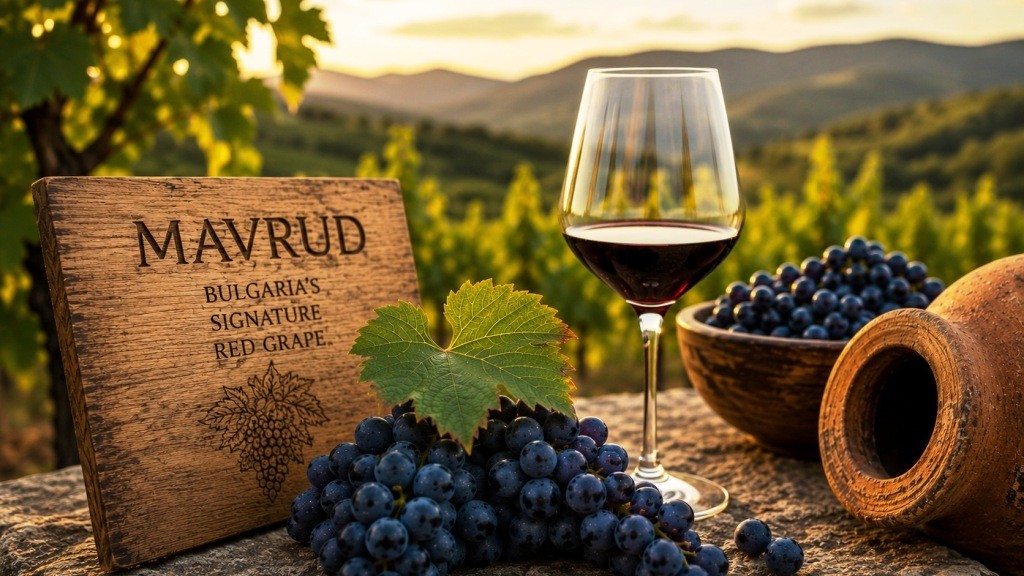
Mavrud is an indigenous Bulgarian red grape variety and one of the grapes most closely associated with the country’s wine identity. The Thracian Lowlands in southern Bulgaria are considered one of its principal home regions.
Mavrud can produce deeply coloured red wines with plenty of structure, acidity and tannin. Depending on how it is made, its style can range from fruity and relatively approachable to powerful, spicy, oak-aged wines capable of developing further in bottle.
Zagreus has made Mavrud central to its winemaking. Alongside VINICA and Family Collection, the winery produces Mavrud Reserve, Minimum Mavrud, natural wines, low-intervention wines, rosé and even white wine made from Mavrud.
That is what makes the grape so interesting: not simply that it is distinctly Bulgarian, but that it proves capable of far more than a single traditional red-wine style.
Discover the Mavrud grape variety: The Mavrud Grape →
Why are the grapes dried before winemaking?
One of the most distinctive similarities between VINICA and Family Collection is their use of dried grapes.
The technique is reminiscent of appassimento, the method best known from Amarone in northern Italy. With this approach, healthy grapes are dried for an extended period after harvest before the actual winemaking begins.
As the grapes lose water, their natural concentration increases. This can lead to greater extract, more intense aromas, deeper colour and a fuller mouthfeel.
Zagreus applied this principle to Mavrud and developed its own distinctly Bulgarian interpretation. For VINICA, the grapes are dried for around two to three months before fermentation, and the same method is also used for other Mavrud wines from Zagreus. The producer itself refers to the similarity with the appassimento technique associated with Amarone.
Importantly, dried grapes do not automatically mean a sweet wine. VINICA and Family Collection are dry red wines. Here, the technique is used to build concentration and complexity, not to produce a dessert wine.
Explore our selection of wines made from dried grapes →
Zagreus Winery – Mavrud in Focus
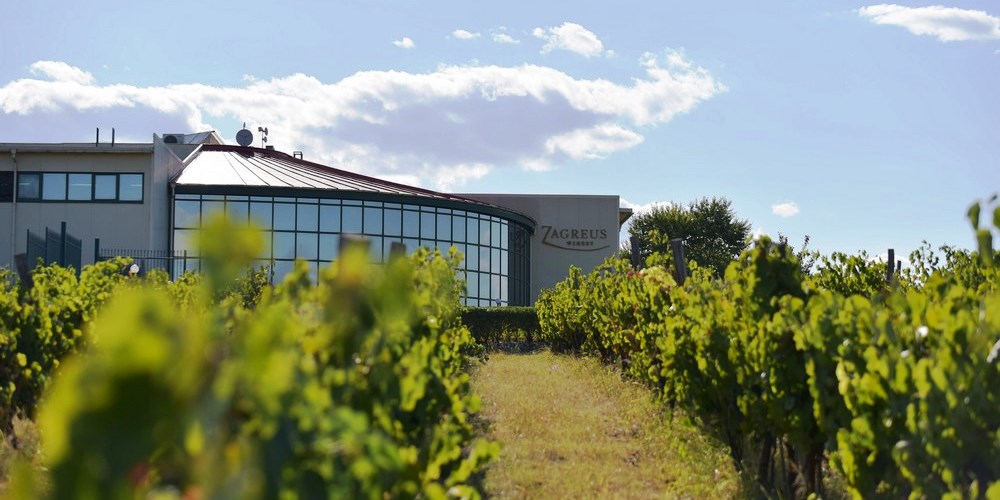
Zagreus Winery is a family-owned winery in the Thracian Lowlands of southern Bulgaria. The first vines were planted in the late 1990s, and the winery itself was built in 2004. Today, Zagreus manages around 120 hectares of its own vineyards, planted with Mavrud, Cabernet Sauvignon, Syrah and Merlot. Since 2010, the vineyards have been cultivated in accordance with European organic production standards, followed by full organic certification after the conversion period.
Mavrud holds a particularly important place in the winery’s portfolio. Zagreus uses the grape not only for classic red wines, but also explores partially dried grapes, spontaneous fermentation, minimal-intervention winemaking, different approaches to oak ageing and a range of other styles.
VINICA and Family Collection are two particularly distinctive examples.
That makes the repeated recognition of different Zagreus wines at Proefschrift at least as interesting as the success of any single bottle. It is not just one wine that continues to perform well, but different expressions from the same producer that repeatedly find their place among international finalists.
Read more about Zagreus Winery →
21 September: the final day and Wine of the Year 2026
The final reaches its conclusion on Monday, 21 September 2026, during Gastvrij Rotterdam in Rotterdam Ahoy.
The final selection
On the first day of the trade fair, the Proefschrift Theater will focus largely on the 38th Proefschrift Wine Competition. The finalist wines will be presented throughout the day and can be tasted by professional visitors between 10:00 and 18:00. At 15:00, the winning wines in each price category will be announced and the winning importers honoured. Our two Mavrud wines are part of this final selection and will be presented by Bulwine Import in Hall 6, stand 6100.
We will be there in person
We will also be present throughout the final day at the Proefschrift Theater to present VINICA Mavrud 2020 and Family Collection Mavrud 2020 to the professional audience at Gastvrij Rotterdam. Between 10:00 and 18:00, visitors will not only be able to taste the wines, but also meet us directly and learn more about Mavrud, Zagreus Winery and the story behind both wines. During Gastvrij Rotterdam, we will also take part in other themed tastings, both on the competition day and on the other days of the fair, featuring selected wines from the programme and from our portfolio.
Wine of the Year 2026
Whether one of our wines will ultimately be named Wine of the Year 2026 will be decided on 21 September.
The continuity
Whatever the final result, our two Mavrud wines have already earned their place among the top wines in this year’s Proefschrift Wine Competition. And looking at the results of recent years, perhaps the bigger story is even more interesting: Bulgarian wine and wines from our own portfolio are not appearing among established international names just once by chance – they are repeatedly earning their place alongside them.
Results Proefschrift 2026 /Dutch/:
38th Proefschrift Wine Competition - Results, part 1 →
38th Proefschrift Wine Competition - Results, part 2 →
Bulgarian wine in Europe and the UK
For us at Bulwine.com, this recognition matters beyond the Dutch market where the Proefschrift Wine Competition takes place. Our mission is to make quality Bulgarian wines easier to discover and order across the EU and the UK. So results like these offer an independent reference point for wine lovers in many different European markets.
We select our wines directly from Bulgarian winemakers and have worked with many of the wineries and wines in our portfolio for years. Naturally, we believe in the quality of what we select – otherwise we would not offer it. Independent professional recognition adds important weight to that conviction.
When wines made from indigenous Bulgarian grapes such as Mavrud are repeatedly selected alongside wines from France, Italy, Spain and other established wine countries, Bulgarian wine no longer needs to be judged by a separate standard. It simply becomes a question of wine quality.
And perhaps that is ultimately the most meaningful thing about these two finalists: not that Bulgarian wine deserves to be treated as an exception, but that it is increasingly showing that it does not need to be one.
Read more about Bulgarian wine:
Bulgarian Wine: Discover the Wines of Bulgaria →
Why Bulgarian Wine? Discover why Bulgarian wine is worth exploring →
All Articles, Awards, Featured
Related Products

Tiara White Mavrud BIO | Blanc de Noir
A white wine from Bulgaria’s emblematic red grape variety Mavrud Tiara White Mavrud BIO is a dr..
€11.25 Ex Tax: €9.30

FAMILY COLLECTION Mavrud | From dried grapes | By Zagreus
An extraordinary red wine from sunny Thrace! Many wine lovers already know our..
€36.00 Ex Tax: €29.75

MINIMUM Mavrud | From dried grapes
Born by the winery's philosophy, the unique terroir an the strive for natural, orga..
€28.89 Ex Tax: €23.88

SANTIMENTI Mavrud
Vin nature Created by Mother Nature. With the kind cooperation of the Wine Fellowshi..
€16.20 Ex Tax: €13.39

VINICA MAVRUD BIO | From dried grapes
Officially the most recognizable Bulgarian wine in style, concept and taste profile! ..
€21.00 Ex Tax: €17.36

Zagreus Mavrud Reserve BIO
The contemporary image of the oldest indigenous Bulgarian grape Mavrud ... LATEST R..
€13.90 Ex Tax: €11.49